 House Of Decks
Game rules
Chinchón
Meld your seven cards into sets and runs before anyone else, close the hand when your loose cards are worth little, and be the last player still at or under 100 points (or 50 in the short game).
Deck
Spanish 40-card deck (two decks with 5 or 6 players)
Players
2 to 6 players
The melds
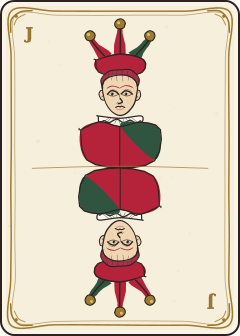
Set: three or four cards of the same number in any suit (three jacks, for example).
Run: three or more consecutive cards of the same suit. The order is 1, 2, 3, 4, 5, 6, 7, jack, queen and king: the 40-card deck has no 8s or 9s, so the 7 and the jack are consecutive. Runs do not wrap: king, 1, 2 is not a run.
A card can only belong to one meld. Cards that are not part of any meld are your loose cards and they count against you: court cards (jack, queen, king) are worth 10 and the rest their number.
How your turn works
Everyone is dealt seven cards and one is turned face up to start the discard pile. The player after the dealer starts and play continues in order.
On your turn you draw one card: the top of the deck, blind, or the top of the discard pile, which everyone can see. Then you discard one card face up. You cannot discard the card you just took from the discard pile.
The table marks which of your cards are already melded (with a coloured bar) and what each loose card is worth, and tells you as soon as you can close. You can arrange your hand by dragging cards or with the Sort button.
Closing
After drawing you may close instead of discarding normally: you discard one card face down and show your hand. You may only close if, of the seven cards you keep, at most one is loose and it is worth 5 or less.
The closer scores the value of their loose card. Closing with all seven melded scores -10: closing "on minus ten".
If your seven cards are a single run in one suit (1 to 7, or any seven in a row) that is a chinchón, and it wins the whole game on the spot, whatever the scoreboard says.
The count
When someone closes, everyone shows their hand. Each hand is melded in the best possible way, and loose cards can also be laid off on the closer's melds (the fourth king on their set of kings, the 4 of coins in front of their 5-6-7 of coins). Whatever is still loose is added to that player's score.
At House Of Decks the table does this for you, always the way that leaves you the fewest points: nobody loses points for a careless count.
If the deck runs out, the discard pile (except its top card) is reshuffled and play goes on. If it runs out twice more without anyone closing, the hand is void: nobody scores and a new hand is dealt.
Elimination, buy-back and the end
A player who goes over 100 points (over 50 in the short game) is out. Reaching exactly 100 does not eliminate you yet.
With buy-back on, a player who goes over can come back once per game on the score of the worst player still in, as long as at least two players remain.
The last player still under the limit wins, or whoever closes with chinchón. If the last players all go over in the same hand, the one with the fewest points wins.
Tips and strategy
What weighs and what melds
A loose court card is 10 points against you if someone closes. Early in a hand you can afford to keep a pair of kings waiting for the third; from the third round on, every court card that does not meld is a risk, and it usually goes before a low card.
Low cards are your insurance: a loose ace or two barely counts and also lets you close, because the loose card when closing must be worth 5 or less.
Two-card runs open at both ends (4-5 of cups, which melds with the 3 or the 6) are worth more than those that can only grow one way (1-2, or queen-king).
The discard pile talks
Taking from the discard pile shows the whole table what you are after. Do it when the card really melds something, not for a small improvement: the table remembers what you took and you will see it in what people stop throwing.
Watch what the player after you has taken (it shows under their seat) and do not feed them cards of that number, or of the same suit and close by. Holding a card for a turn usually costs less than handing them the close.
When to close
Almost always, as soon as you can. Closing with a loose 4 costs you 4; waiting another round for minus ten risks someone else closing and catching you halfway.
It is worth holding on when you have six cards of a run in one suit and the seventh is still live: a chinchón wins the whole game.
Near the limit, other players' scores matter more than yours: if someone is about to go over, closing early can knock them out.
Frequently asked questions
How low do you need to be to close?
At most one unmelded card, worth 5 or less. With all seven melded you close "on minus ten" and take 10 points off your score.
What is a chinchón?
All seven cards in your hand in a single run of one suit, for example 1 to 7 of coins. Closing with a chinchón wins the game on the spot.
What are court cards worth?
The jack, queen and king are worth 10 points each. Every other card is worth its number.
What is the buy-back?
A room option: a player who goes over the limit can come back once per game on the score of the worst player still in. It makes going out early hurt less.
How long does a game take?
With four players to 100 points, about fifteen minutes. The short game, to 50, takes roughly half as long.
Chinchón, against the computer
Deal right now against the computer - no sign-up, nobody to wait for.
Play now against the computer